
From Render to Race Day: The Life Cycle of a Wrapp Starr Baja Build
In the world of off-road racing, the “build” is a rite of passage. But while most of the focus is on the long-travel suspension, the horsepower, and the tire compound, there is one final step that transforms a machine of metal and fiberglass into a racing icon: the livery.
At Wrapp Starr, we don’t just “stick stickers” on trucks. We execute a high-precision workflow designed to survive the harshest desert conditions in the world. Whether you’re prepping for the Baja 1000 or a local desert sprint, here is the step-by-step evolution of a world-class race wrap.
Phase 1: The Vision & 3D Render
Every legendary truck starts as a digital blueprint. We don’t guess how a graphic will look on a flared fender; we prove it.
- The Design Brief: We start by analyzing your brand and sponsors. A race wrap has two jobs: look aggressive and make your sponsors visible from 100 yards away at 80 mph.
- 3D Modeling: We utilize high-resolution 3D renders of your specific chassis. This allows us to “wrap” the truck virtually, ensuring that logos don’t get cut off by body lines, rivets, or light bars.
- Client Approval: You see the finish line before we even load the vinyl. This is where we tweak the color gradients and metallic accents to perfection.
Phase 2: Material Science for the Desert
The Tucson sun and the silt of the Baja Peninsula are brutal. Standard commercial vinyl will fail in the first 50 miles.
- High-Tack Adhesives: We select specialty “high-tack” films designed to bond to low-energy surfaces like raw fiberglass and powder-coated tubing.
- UV-Resistant Overlaminate: Every race wrap is protected by a heavy-duty laminate. This isn’t just for shine; it acts as a sacrificial layer against “desert pinstriping” (scratches from brush) and the sandblasting effect of high-speed silt beds.
- Specialty Finishes: In 2026, we’re seeing a massive trend in “Reflective Racing Graphics,” which help the truck pop during night stages, making it easier for chase teams to identify the rig.
Phase 3: The “Strip-Down” Prep
A wrap is only as good as the surface beneath it.
- Deep Decontamination: Race trucks are often covered in grease, oil, and dust. We perform a multi-stage chemical cleaning to ensure the surface is surgically clean.
- Hardware Removal: To get that “painted-on” look, we remove light pods, vents, and body panels. This allows us to tuck the vinyl deep into the seams so it won’t lift when the truck is being power-washed post-race.
Phase 4: Precision Installation
This is where the magic happens. Our installers use heat and tension to mold the vinyl around the complex curves of a Baja truck’s aggressive bodywork.
- Seam Sealing: On off-road rigs, we use edge-sealing tapes and primers on high-stress areas like the leading edges of fenders. This prevents wind and dirt from getting under the film at triple-digit speeds.
- Logo Application: Sponsors are layered with precision, ensuring they are perfectly horizontal even on the slanted lines of a prerunner’s door.
Phase 5: Race Day & Beyond
Once the truck leaves the Wrapp Starr shop, the real test begins.
A professional race wrap doesn’t just look good for the photos at the starting line; it holds the truck together. In the event of minor fiberglass cracks, a thick vinyl wrap can actually help keep the body panels intact until you reach the next pit.
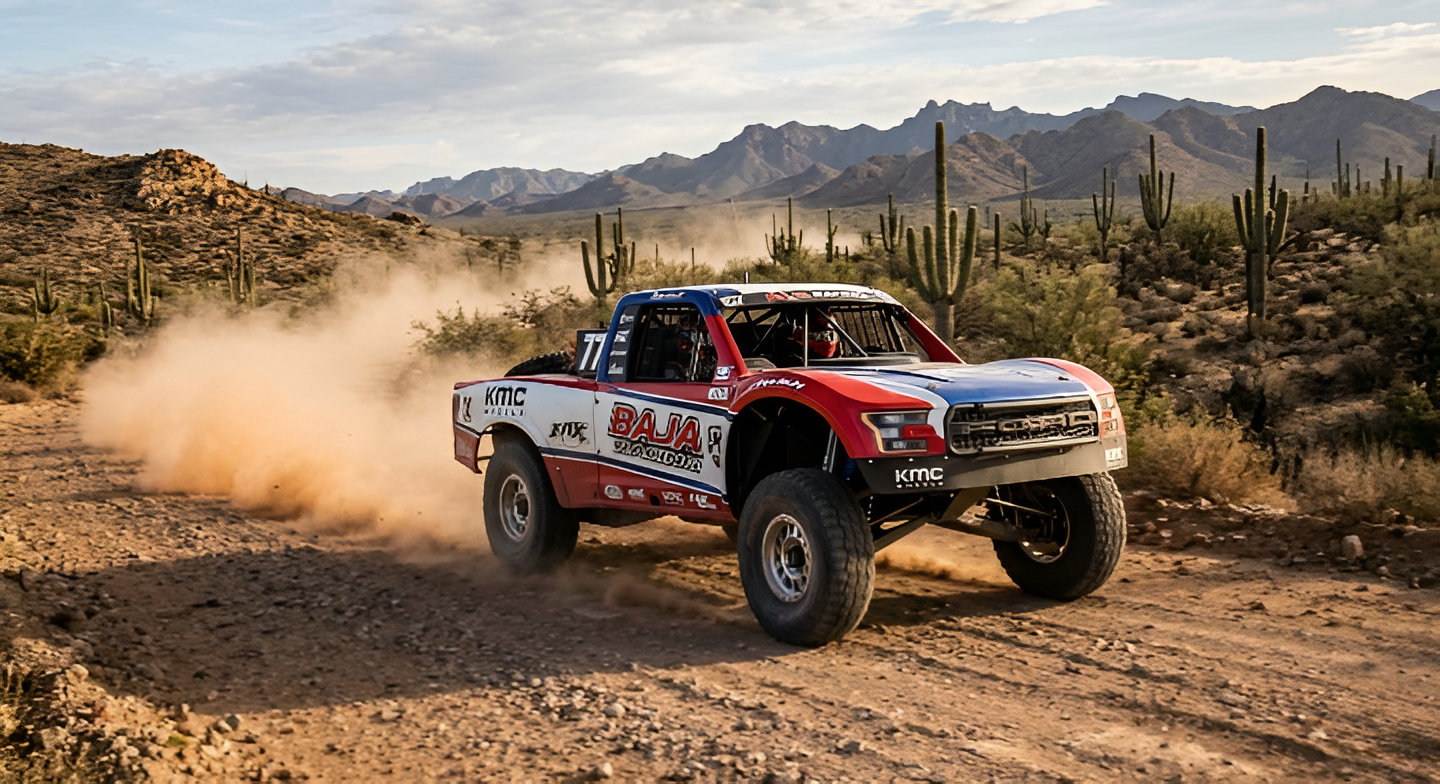
The Final Result: A Desert Icon
From a blank render on a screen to a dust-covered hero crossing the finish line, the journey of a race wrap is about more than just aesthetics; it’s about identity. At Wrapp Starr, we take pride in being the final touch on your team’s hard work.